
Case Study CS03 · Fine-gauge rib
14GG Ribbed Knit Maxi Dress Development
Reviewed by VIAKNIT Technical Development Team
Balance drape and length control in a fitted rib dress with a shoulder cut-out and high slit.
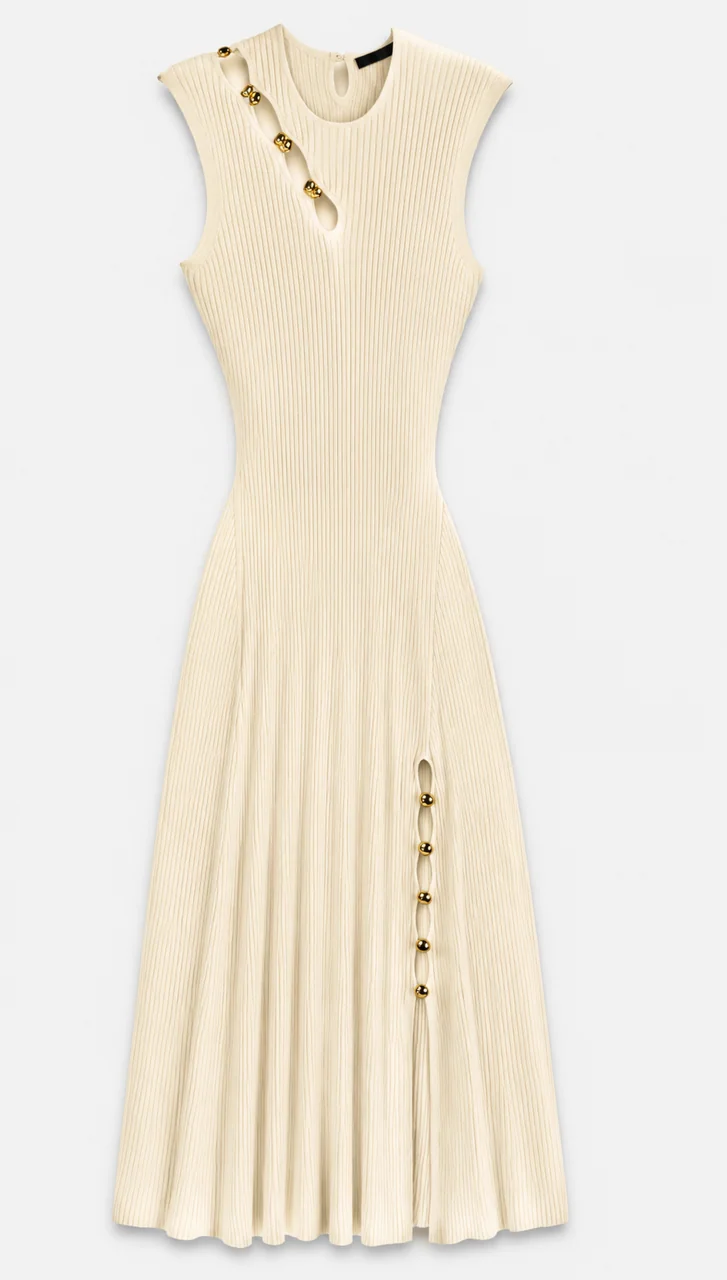
Developing a fitted ribbed knit maxi dress requires more than selecting a suitable yarn and knitting gauge. Fabric elasticity, vertical stretch, garment weight, dimensional stability and construction details all influence how the finished dress fits and performs.
This VIAKNIT development case study focuses on a women's 14GG ribbed knit maxi dress made with a 2×1 rib construction and a viscose-polyester blended yarn. The design combines a clean vertical rib texture with an asymmetric shoulder cut-out, gold-tone metal trims and a high side slit.
The challenge is to maintain the visual definition of the rib structure while achieving the desired drape and fit. The cut-out, metal decorations and slit also introduce local construction requirements that need to be considered alongside the main knitted fabric.
For this type of garment, yarn selection, stitch density, fabric relaxation, garment measurements and finishing conditions need to be evaluated as part of one development process.
Project Background: A Fine-Gauge Ribbed Dress with Structural Details
The design is positioned within premium contemporary women's knitwear, with a focus on a fitted silhouette and distinctive construction details.
Three elements define the garment.
Asymmetric Shoulder Cut-Out
The upper body features an asymmetric cut-out design, with gold-tone metal details creating a focal point around the shoulder.
Vertical 14GG Rib Construction
The main body uses a 14GG 2×1 rib structure. The vertical rib lines create texture and help establish the fitted silhouette while retaining the natural elasticity of knitted fabric.
High Side Slit and Maxi Length
The long skirt incorporates a high side slit to introduce movement and allow greater freedom when walking. The slit opening needs to be considered in relation to the stretch and stability of the knitted structure.
For a designer knitwear brand, the objective is not simply to produce a ribbed dress. It is to translate these design features into a garment with controlled proportions, appropriate fabric behaviour and reliable construction.
Yarn Selection and Technical Specifications
The specified yarn for this development is a viscose-polyester blend.
| Specification | Project Details |
|---|---|
| Product | Women's Ribbed Knit Maxi Dress |
| Knitting Gauge | 14GG |
| Stitch Construction | 2×1 Rib |
| Yarn Count | 1/37 NM |
| Fibre Composition | 83% Viscose / 17% Polyester |
| Main Design | Asymmetric Cut-Out |
| Decoration | Gold-Tone Metal Trims |
| Garment Style | Fitted Maxi Dress |
| Additional Construction | High Side Slit |
The yarn composition is an important consideration in this design.
Viscose contributes softness, moisture absorption and a fluid fabric character. Polyester provides additional mechanical support to the yarn and knitted fabric.
However, the presence of 17% polyester does not automatically guarantee dimensional stability or prevent the garment from stretching out.
The actual performance also depends on yarn construction, stitch density, knitting tension, fabric weight, relaxation and finishing.
For a long ribbed dress, particular attention should be given to vertical dimensional changes. Even relatively small changes in fabric length can affect the final garment proportions.
The yarn specification therefore needs to be considered together with the knitted structure and intended garment measurements.
Five Key Technical Challenges
3.1 Maintaining Clear and Consistent 2×1 Rib Definition
The main visual feature of this dress is its vertical rib texture.
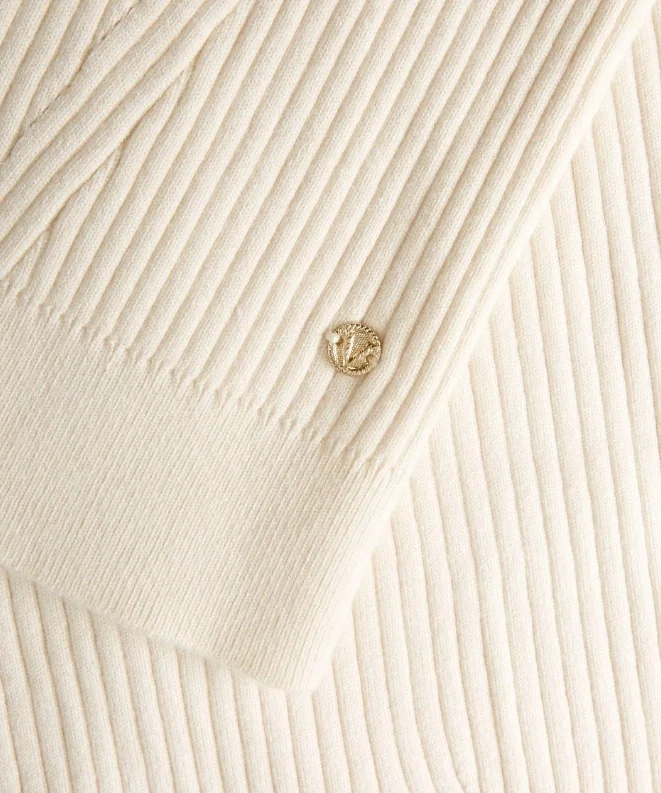
In a 2×1 rib construction, the arrangement of knit and purl wales creates alternating raised and recessed columns. The resulting surface gives the fabric a more pronounced texture than a conventional single jersey construction.
For a fitted maxi dress, consistent rib definition is particularly important because the vertical lines extend across a relatively large garment area.
Variations in yarn tension, stitch density or finishing can affect the width and appearance of the ribs.
The ivory colour used in the design also makes surface irregularities easier to notice under certain lighting conditions.
During fabric development, the technical team should compare different knitting densities and examine the uniformity of the rib columns across the fabric.
The objective is to establish a consistent rib appearance without compromising the stretch and wearing comfort required by the garment.
3.2 Controlling Dimensional Stability in Viscose-Polyester Knitwear
The 83% viscose content is one of the most important material considerations in this project.
Viscose fibres absorb moisture and can swell during wet processing. In knitted fabrics, this may affect fabric dimensions, thickness, density and mechanical behaviour.
For a maxi dress, changes in the vertical direction are especially important.
A garment that has the correct length immediately after knitting may behave differently after relaxation, finishing and washing.
The development process should therefore distinguish between the machine-off dimensions, relaxed fabric dimensions and finished garment measurements.
Representative fabric swatches should be evaluated before confirming the final garment length.
This helps the technical team establish more reliable measurements rather than basing the pattern entirely on the dimensions of freshly knitted fabric.
3.3 Developing a Stable Asymmetric Cut-Out Structure
The shoulder cut-out is a structural design feature rather than a simple decorative opening.
Its edges need to maintain the intended shape during dressing and normal movement.
If the opening is not properly finished or supported, the surrounding knitted stitches may stretch, separate or become distorted.
The technical development should consider the direction of fabric stretch, the shape of the opening and the forces applied when the garment is put on and taken off.
Local edge finishing and reinforcement methods should be evaluated through representative fabric samples before the final construction is confirmed.
The objective is to preserve the asymmetric outline without making the surrounding fabric unnecessarily rigid.
3.4 Securing Gold-Tone Metal Trims on Knitted Fabric
The gold-tone metal components are an important part of the shoulder design.
Their position needs to correspond accurately with the cut-out structure, while their attachment must be compatible with the elasticity of the knitted fabric.
Directly fixing a metal component to unsupported knitted loops may cause local stretching or movement under repeated use.
The attachment method should therefore be evaluated in relation to the fabric density, trim weight and surrounding construction.
Local reinforcement and suitable attachment structures can help distribute the applied force more effectively.
The metal components should also be checked for surface roughness and sharp edges that could catch or damage the yarn.
Where applicable, chemical compliance requirements, including relevant nickel release restrictions, should be confirmed according to the destination market and customer specification.
3.5 Maintaining Stability Around the High Side Slit
The high side slit adds movement and visual interest to the long dress, but it also creates a local stress point.
Walking, sitting and dressing can apply repeated forces around the upper end of the opening.
If the slit is not adequately reinforced, the knitted loops may stretch or begin to separate along the opening.
The slit top should therefore be treated as a separate construction detail rather than simply dividing the garment panels.
Local reinforcement and appropriate finishing should be evaluated to help maintain the intended opening shape.
The development should consider both the visual height of the slit and the wearer's freedom of movement.
VIAKNIT's Development Process
For this type of fine-gauge ribbed dress, we recommend a five-stage development process.
Stage 1 — Yarn Evaluation
Confirm the actual composition, colour consistency, yarn evenness and strength of the specified 1/37 NM viscose-polyester yarn.
Initial knitting trials should evaluate yarn feeding and stitch formation on the 14GG machine.
Stage 2 — 2×1 Rib Knitdown Development
Develop representative 2×1 rib swatches at different knitting densities.
The main evaluation points include rib width, fabric weight, stitch density, horizontal stretch and vertical elongation.
Keeping comparative swatches provides a practical basis for selecting the fabric construction before proceeding to the complete garment.
Stage 3 — Cut-Out and Metal Trim Development
Develop a representative shoulder cut-out sample.
Evaluate the opening edge construction, reinforcement method, metal trim attachment and fabric response under stretching.
The metal component specifications and placement should be confirmed together with the cut-out construction.
Stage 4 — First Garment Prototype
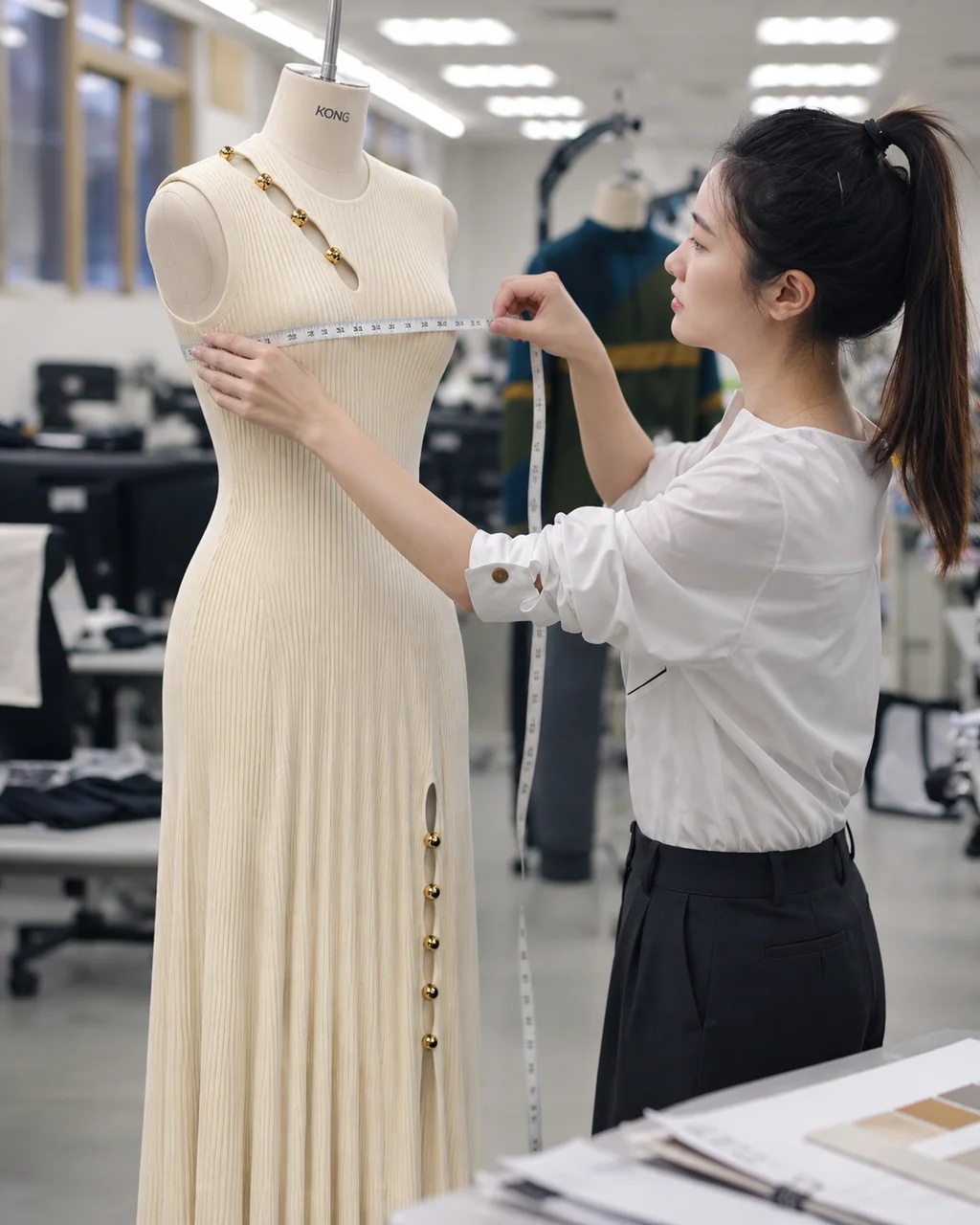
Develop the complete maxi dress and review the bust, waist, hip, garment length and slit height.
The vertical continuity of the rib structure is particularly important.
The garment should also be assessed for fit, movement and the relationship between the fitted body and the skirt length.
Stage 5 — PP Sample and Production Approval
Review the garment after the relevant fitting and washing assessments.
Any necessary adjustments to garment measurements, cut-out reinforcement, metal trim attachment and slit construction should be recorded.
The approved specifications and pre-production sample should provide the reference for subsequent manufacturing.
For this type of product, we would not recommend moving directly from the first fabric swatch to a complete production sample without understanding the fabric's relaxation and wet-processing behaviour.
VIAKNIT's Technical Decisions
Four technical decisions are particularly important in this development.
Why Use 14GG 2×1 Rib Construction?
14GG provides a fine-gauge knitting foundation for developing a refined vertical rib texture.
The 2×1 rib construction creates more pronounced surface definition than a conventional single jersey fabric and provides natural transverse elasticity that can be useful for fitted knitwear.
However, gauge alone does not determine the final fabric performance. Yarn count, machine tension, stitch density and finishing conditions all influence the result.
How Do We Control Viscose Blend Drape and Garment Length?
The fabric should be evaluated after relaxation and the relevant wet-processing stages.
The final garment length should be determined from the behaviour of the finished fabric rather than relying only on machine-off dimensions.
For this reason, fabric relaxation, washing performance and dimensional change are important considerations before confirming the final garment specifications.
How Do We Integrate Metal Decorations with Cut-Out Construction?
The relationship between the metal trim and the cut-out edge needs to be considered during the same development stage.
If the trim is attached to an unsupported area, repeated movement may stretch the surrounding knitted loops.
We recommend evaluating local reinforcement, attachment construction and trim security together.
The metal surface should also be checked for potential yarn damage and applicable chemical compliance requirements.
How Do We Maintain the Shape of a High Side Slit?
The upper end of the slit should receive specific construction attention.
Local reinforcement and finishing methods should be evaluated under the relevant movement and wear conditions.
The objective is to maintain the intended opening while reducing the risk of local stretching or stitch separation.
Quality Assessment and Verification
The final garment should be assessed against its approved design and technical specifications.
| Inspection Area | Main Evaluation Criteria |
|---|---|
| Rib Definition | Clear and consistent rib columns |
| Hand Feel | Softness and wearing comfort |
| Drape | Appropriate natural drape |
| Dimensional Stability | Acceptable measurements after washing |
| Stretch Recovery | Suitable recovery after stretching |
| Cut-Out Stability | Stable opening edges without stitch separation |
| Metal Trim Security | Secure attachment and appropriate positioning |
| Slit Reinforcement | Adequate stability around the slit opening |
| Pilling and Abrasion | Surface performance against agreed requirements |
The performance of viscose knitted fabrics cannot be reliably predicted from fibre composition alone.
A 2024 study published in Fibers examined how yarn structure and wet processing influence the properties of viscose and lyocell rib knitted fabrics, including dimensions, strength, breathability and abrasion behaviour.
Although that research was not a direct test of this particular 83/17 viscose-polyester yarn, it illustrates why the actual yarn and knitted construction need to be evaluated rather than relying solely on fibre composition.
For this development, the relevant test results should come from the actual fabric and garment samples.
The final assessment should consider whether the rib definition, garment length, cut-out shape and metal decorations remain within the agreed requirements after the relevant finishing and washing procedures.
What Designers Should Consider Before Developing a Ribbed Knit Maxi Dress
A fitted ribbed maxi dress requires coordination between material selection, knitting construction and garment pattern development.
Before starting sampling, designers should consider the intended fit, garment length, yarn composition, desired fabric weight and the degree of stretch required.
Special design features such as asymmetric cut-outs, metal trims and high slits should also be identified at the beginning of development.
For viscose-based knitwear, it is particularly important to discuss fabric relaxation and dimensional changes before finalising the garment measurements.
If the project starts with a reference image rather than a complete Tech Pack, the technical team can first review the design and identify the main fabric and construction requirements.
This helps establish a practical development direction before the complete garment is sampled.
Technical Questions
How do manufacturers maintain stretch recovery in ribbed knit dresses?
Stretch recovery is influenced by fibre composition, yarn construction, rib structure, stitch density and finishing.
The development process should evaluate both horizontal and vertical stretch, together with the fabric's recovery after extension.
The actual performance needs to be assessed through representative swatches and the finished garment.
How do you control the length and width of a ribbed maxi dress?
Length and width should be evaluated after the fabric has relaxed and undergone the relevant finishing processes.
For a long ribbed dress, vertical dimensional changes are especially important because they can affect the overall proportions and fit.
The approved measurement specifications should be based on the finished fabric and garment, with clear measurement methods applied before production.
How should a ribbed dress be measured before bulk production?
Measurements should follow the approved garment measurement specification and should be taken under consistent conditions.
Important points include bust, waist, hip, total length, shoulder measurements and slit height.
For ribbed knitwear, the garment's relaxed state and measurement method need to be clearly defined because the fabric can change dimensions depending on how it is laid and handled.
Related Expertise
16GG Merino Wool Rib Cardigan Development ↗
Discuss Your Project